
Top 10 Tips On The Emergency Support Of PAT in Hinckley
Emergency support for Portable Appliance Testing is provided in the most critical instances when electrical equipment failures present immediate risks and cannot wait until scheduled maintenance cycles. The emergency services, unlike the planned and risk-based procedure for regular PAT tests, are able to respond to emergencies that require immediate attention such as electric shocks, fires inside appliances, near misses or insurance/health-and-safety audit requirements. The Electricity at Work Regulations of 1989 and the Health and Safety at Work Act of 1974 require employers to respond immediately to mitigate serious and imminent danger. This makes reliable PAT assistance in emergencies an essential component of risk management. The quality of this emergency response–measured by availability, technician competence, and action effectiveness–directly impacts workplace safety, regulatory compliance, and potential liability. Evaluating a provider's emergency capabilities requires a careful examination of their response protocols technological resources, as well as a an established track record of handling high-pressure electrical safety scenarios.
1. Availability 24/7/365 and specific emergency contact procedures in Hinckley
In order to provide genuine emergency assistance, specialized channels for emergency assistance must be in place throughout the day and night. They should not be part of standard business phone lines. It is usually a monitored 24-hour emergency hotline that is linked to a coordinator on call who can mobilize resources any time of the day or night even on weekends and holidays. The service provider should clearly define their call handling procedures, including maximum callback time (e.g. 30 minutes) and escalation protocols. In the absence of a designated number for emergencies, or proof that calls are routed to voicemail even when it's not business hours, clients are at risk of electrical accidents.
2. Clearly defined emergency response time ensures in Hinckley
Providers may offer various levels of response time for contractual obligations depending on the severity. For instance, Priority 1 – Risk that is imminent – The site must be present within two or four hours in case of an incident involving electric shocks, fires, or smoke. Priority 2 (Urgent Fault) is attendance within 24 hours of identifying critical faults during audits or operational failures of critical equipment that is safety-related. These assurances must be explicitly stipulated in the service level agreements (SLAs) with specific consequences for missed targets including service credits or penalty clauses.
3. Technical Competence Requirements for Emergency Responders
Emergency technicians must have the highest skills and experience as compared to routine testers. They should possess advanced certifications, such as City & Guilds 23,77, along with additional education in fault diagnosis, forensics and safe separation procedures (GS38). It is highly recommended that they have electrical engineering training, allowing them to identify complex issues beyond the normal testing methods. They should also be able to prove that emergency personnel regularly participate in training exercises.
4. The scope of Emergency Services: Investigation, Isolation and certification in Hinckley
Comprehensive emergency support includes three phases: Immediate Investigation, which uncovers the root of the failure. Safe Isolation for faulty equipment, and advice on securing areas affected. A formal Certification that gives documented evidence that proves actions were taken in compliance with insurance requirements. The service should also contain an elaborate emergency report that details the incident, its findings and suggested corrections. This is essential evidence for HSE investigations or for insurance claims.
5. Resources and equipment are available in case of an emergency in Hinckley
Emergency response vehicles should function as mobile workshops stocked with: calibrated test equipment, complete spare parts (plugs, cables, fuses), replacement appliances for equipment that is critical, dangerous situation isolation tools (lock-out tag-out kits) as well as personal protective equipment (PPE). Technicians can solve most problems immediately instead of simply notifying them, and thus requiring more appointments.
6. Integration the Incident Reporting (RIDDOR) and the RIDDOR considerations in Hinckley
Emergency service providers who are competent are familiar with their legal obligations under the Reporting of Injury and Dangerous Occurrences rules (RIDDOR). They must assist customers in determining if an electrical incident qualifies as a reportable hazardous occurrence (e.g. an short circuits in electrical power that cause fire or explosion) and also provide evidence of technical nature to support the process of reporting. The advisory role is an essential part of emergency assistance that assists the holder of the duty to fulfill their legal obligations after significant incidents involving electrical safety.
7. Post-Emergency System Review with Preventative Recommendations in Hinckley
When the emergency has been cleared, the provider should conduct an evaluation that is formal to determine systemic weaknesses and underlying causes. It is crucial to assess if the current risks assessments, testing frequency, and maintenance schedules are adequate. This proactive approach can transform an emergency response that was reactive, into an opportunity to improve the safety management system.
8. Communication Protocols in the event of and following emergencies in Hinckley
It is essential to follow the clearly defined protocol of communication when dealing with situations that are high pressure. The provider should guarantee that the first call will be acknowledged within 15 minute and a dispatch notice with an ETA and confirmation of on-site arriving, and the initial report within an hour. Within 24 hours of resolution an in-depth report on the incident should be released. Then, follow-up with the debriefing session to discuss the results and preventive measures.
9. Transparency on the pricing of emergency call-outs in Hinckley
Prior to a crisis, the pricing for emergency services should be clearly defined. Contracts should clearly specify emergency call-out costs (typically PS150-PS300), hourly rates for urgent work (often 1.5-2x standard rates) Parts pricing, as well as any extra charges for out of hours response. Transparent pricing avoids financial surprises during emergencies and helps the duty holders to make informed choices in approving urgent repairs.
10. Documentation and evidence preservation for legal instances in Hinckley
Many times, situations with legal implications are encountered in emergency response. Technicians need to be trained on how to protect evidence. This means taking pictures of the conditions that are causing fault and then conserving them in a secure manner. The final report must be forensically solid, accurately recording both the equipment's pre-intervention condition and the actions taken. The report could be necessary for insurance disputes and HSE investigations or possible legal proceedings. Read the top electrical equipment testing in Hinckley for site recommendations including fire extinguisher testing, all about fire extinguisher, a fire extinguisher, extinguisher fire extinguisher, electrical fire extinguisher, fire extinguisher servicing, extinguisher company, electrical extinguisher, fire extinguisher for an electrical fire, fire extinguisher service near me and more..

Top 10 Tips About The Emergency Support For Fire Extinguishers Service in Hinckley
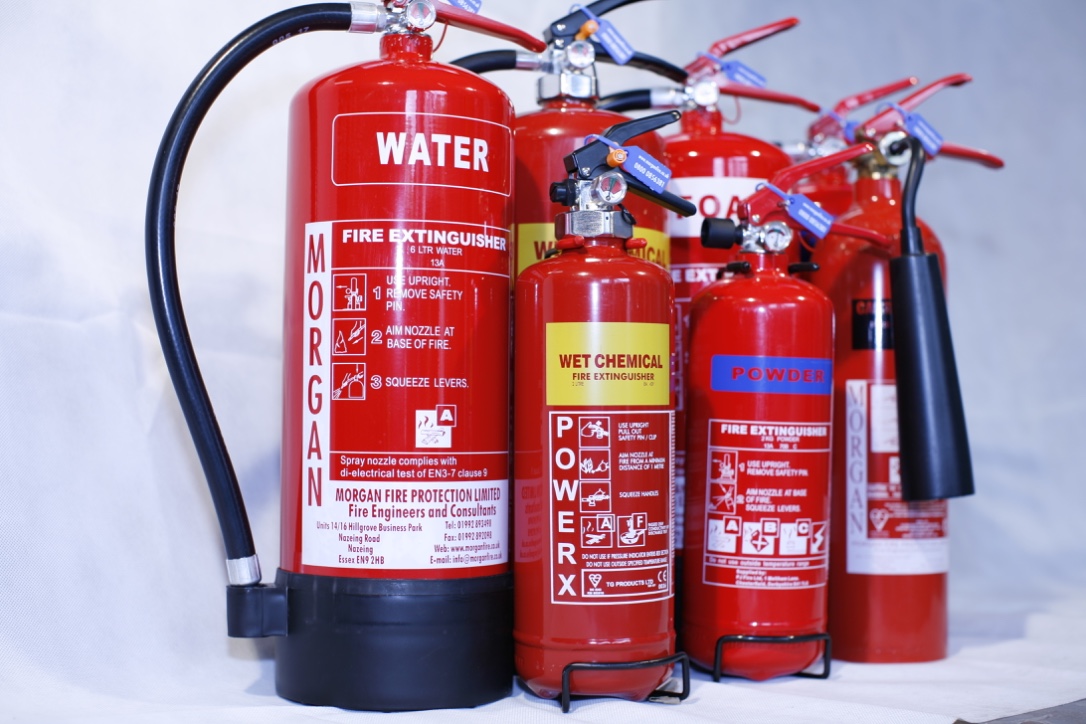
Emergency support in fire extinguisher maintenance is a critical part of your compliance with fire safety regulations. It's where the theoretical guidelines and real-world urgency meet. According to the Regulatory (Fire Safety) Order, the Responsible person is required to ensure that the firefighting equipment is in good operating state. Damages, failures, or discharges of equipment result in an immediate compliance lapse, and is urgently addressed. Support services for emergencies are not just a convenience, they are an essential part of a comprehensive fire safety strategy that directly affects the management of risk, insurance validity and operational resiliency. A provider's emergency response capability–encompassing availability, communication, technician competence, and logistical readiness–reveals their true commitment to client safety beyond routine maintenance. This requires careful analysis of the service level agreement, geographical coverage limitations, and the actual implementation of the promised response times.
1. 24/7/365 availability and dedicated emergency Contact Channels in Hinckley
In a true emergency, you need constant availability. This means an emergency contact number that is available 24 hours a day, every day of the year, which includes every public holiday. This should not be a standard office phone number, which is routed to voicemail at the end of the night. Instead it must be a designated hotline, where a coordinator is able to quickly dispatch engineers. The provider's out-of hour call handling procedure should be clear in order to ensure that any reported emergencies are not unanswered on the next day of business, leaving your premises insecure and not compliant.
2. Clearly Defined and Contractual Response Time-Guarantees in Hinckley
Without contractual guarantees, ambiguous promises of "rapid responses" have no meaning. The Service Level Agreement (SLA), must specify specific and quantifiable responses tiers. For instance, Priority 1 (Critical issue that affects multiple units): Engineer dispatched within four working hours. Priority 2, (Single unit missing/discharged) Site Attendance within 24 Hours. The SLA should be clear about these tiers in relation to the risk associated, and provide consequences if they are consistently not met. For example, credit for service or termination rights. This is how a commitment can become an established standard.
3. Local Engineers and Geographic Coverage Deployment
Geo-logistics is vital to ensuring quick response. National providers must have a strategically distributed network of engineers to ensure local coverage. Check the availability of engineers within your region. A company with engineers based within your town or region can generally meet a target of 4 hours; the one who must dispatch an Engineer from another region can't. Understanding their deployment process is essential to assess the realism of their response claims.
4. Emergency Services: Assessment and Repair in Hinckley
The emergency response must be complete. The scope of the service should include immediate assessment on site repair capabilities to be completed using items kept (seals. Hoses. Pressure cartridges), but most importantly the immediate replacement of damaged or destroyed fire extinguishers. Inadequate response is the result of an engineer visiting a unit to degrade it, then departing, and demanding another visit several days later in order to fix the extinguisher. The asset is not protected and the building isn't compliant. A true emergency response resolves problems on the first visit.
5. Lending Equipment During the Resolution Period in Hinckley
A premium emergency service will loan equipment to resolve complex issues which cannot be fixed immediately (e.g. special equipment that requires ordering). It is important to maintain fire protection throughout the resolution of the problem. This must be clearly stated What is the cost? How long is the period of the loan? How do the loan equipment be tracked and managed? This is especially crucial in environments that have a high risk, for instance, where leaving fire points empty isn't an option.
6. Communication Protocols and Proactive Updates in Hinckley
In an emergency, communication clarity is vital. The protocol for the company should include a telephone acknowledgment, an estimated time for arrival (ETA) as well as a notice of the engineer's arrival. A thorough emergency service report should be prepared immediately following the visit. It should detail the problem, any actions undertaken and the replacement of any parts. The report is a vital document to keep in your compliance files and any communication with insurance companies.
7. Pricing Transparency for Emergency Call-Outs in Hinckley
The price for emergency calls must be clear and simple to avoid misinterpretation. The contract should include the cost of an emergency call-out along with any extra charges applicable for holidays, weekends or nights. It should make a distinction between the fixed dispatch charge as well as the cost of labor as well as replacement parts and other costs. There should be no confusion. It is best to agree on these rates in the contract so that you know the charges prior to making an emergency call.
8. Qualifying and Competent Emergency Response Engineers
Not juniors on a rotation not the top and most experienced technicians. They must be able to detect and fix a vast number of problems efficiently and swiftly under pressure. They must be certified in advanced areas such as FIA Unit 010, (Overhaul Portable Fire Extinguishers), as well as a long-standing experience. Verify if the service provider has a team of experts who are vetted for emergency call, to ensure the responder can be able to match your speed.
9. Integrating Alarm Monitoring and Facilities Management Systems
Emergency support systems must be integrated seamlessly into existing building management systems for big sites or buildings with high-risk properties. This means providing contact information directly to alarm receiving centers (ARCs), allowing the detection of faults through automated monitoring, and then reported directly back to the provider. Additionally, the provider needs to be able to communicate with the facility management staff and follow protocols for access to the site and re-educating staff on duty.
10. Follow-up on Post-Emergency and Compliance Reconciliation in Hinckley
Once the engineer is gone the emergency services are still not complete. The provider is accountable to initiate a formal follow-up process so that the incident is closed properly within your files. This involves the issue of a formal certificate to any equipment that is newly you install; updating your asset register; and requesting a review of your Fire Risk Assessment to see whether the incident could be a sign of a wider issue (e.g. vandalism that has been recurring that requires a security measure). This process is closed to ensure that not only has the issue resolved technically, it's also been addressed administratively. Read the top fire extinguisher servicing in Hinckley for website recommendations including fire extinguisher fire, fire service fire extinguisher, fire extinguisher for an electrical fire, fire extinguisher for an electrical fire, fire extinguisher, fire extinguisher company, a fire extinguisher, fire extinguisher inspections, fire extinguisher service Hinckley, fire and extinguisher and more. More broadly, read the recommended compliance services for more.