

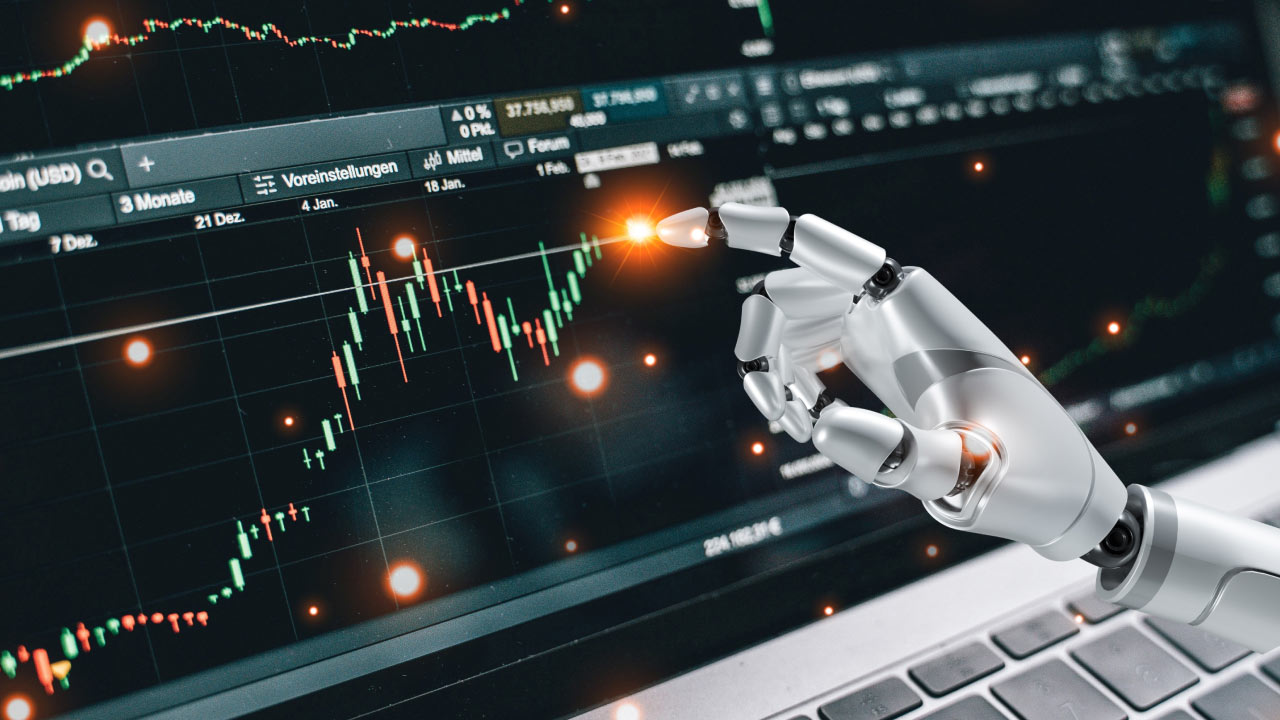
In the financial markets that are usually fast-paced and sometimes volatile, trading successfully is not only a matter of knowledge but also of experience. Paper trading, the practice of trading without the risk of losing one's capital, is a valuable and risk-free way for both new traders and even seasoned ones who are going to try new assets to sharpen their strategies before they put in the real capital. When one talks about popular and heavily traded instruments like gold and the S&P 500, knowing how to paper trade effectively can give a considerable advantage. The discussion in this article will be focused on explaining paper trading, its advantages, and the ways in which the traders can use it to practice trading gold vs S&P 500 to get ready for real investing.
What is Paper Trading?
What is paper trading? Paper trading, which is also referred to as simulated trading or virtual trading, means buying and selling of financial instruments without the use of real money. Traders employ trading platforms through which virtual funds are allocated to emulate the real market conditions and trading strategies are put to test. Risk-free decision making and exposure to market dynamics are provided to traders by this practice.
The idea dates back to the time long before the advent of digital trading platforms, when traders had to literally jot down hypothetically profitable trades on paper to keep track of their performance. Modern paper trading is completely digitized and is part of many online trading platforms where it is a very user-friendly way for people to build and develop their confidence and skills.
Why Paper Trading Matters
The financial markets can be very scary, especially for novice traders who are always looking forward to getting damaged during their learning process. The fear that paper trading can produce is completely eliminated by the provision of a secure space for experiments. Besides, it provides experienced traders with the opportunity to test new strategies or trade with new instruments without putting their capital at risk.
The benefits of paper trading are not limited to the management of risks only. It teaches discipline and emotional control to traders because they can feel the market fluctuations without being pressed financially. Moreover, it gives a good grasp of order execution, platform features, and market timing.
Gold vs S&P 500: Two Most Popular Trading Instruments
Gold vs S&P 500 index are the two financial instruments that are most followed and considered worldwide, each one of them depicting different styles of trading and providing a different set of opportunities.
Gold is the most preferred investment and a safe-haven asset that generally attracts investors during uncertain economic times or when there is a fear of inflation. It has a tendency to be in opposition to the US dollar and various factors such as geopolitical events, interest rates, and inflation data can have an impact on it.
S&P 500, on the contrary, is an index that represents the US stock market containing the 500 largest publicly traded companies. It is regarded as a good indicator of the US economy and equity market performance. The S&P 500 is influenced by corporate profits, economic development, monetary policies, and the mood of the investors.
Trading gold against S&P 500 is often considered by the traders who want to diversify or hedge against risks. It is very important to understand the movements of these assets concerning each other in order to create balanced portfolios or speculative strategies.
Advantages of Paper Trading Gold vs S&P 500
Using paper trading as a method of trading these two instruments has its own set of advantages. Since gold and the S&P 500 typically respond differently to economic pressures, paper trading allows one to discover and learn these differences and similarities while they are happening, thereby maximizing the potential of understanding which can result in effective hedging of portfolios and risk management. Meanwhile, the volatility which is characteristic of both markets, especially in uncertain economic times, can be a reason for paper trading to reinforce the emotional and psychological traits of traders i.e. resilience and discipline. Practicing on the volatile market can help traders during real market stress.
One Should Keep in Mind Limitations of Paper Trading Though
Paper trading, despite being a great practice tool, has its drawbacks. It is impossible for a simulation to recreate completely the emotional scenario of losing or risking one's real money. The psychological aspect of trading is paper trading's limitation and therefore it cannot imitate the trader's side losing or gaining capital factor.
Moreover, some platforms for paper trading may not necessarily provide the same conditions as the real market, namely slippage, order execution delays, or liquidity being too tight. For this reason, traders should be careful to not take paper trading results for granted when they actually place real orders.
Moving from Paper Trading to Real Trading
Once you are confident about your skills and practice through paper trading, the next step is to switch to real trading in which case you should begin with smaller positions for risk management. Keeping the discipline and strategies developed during the paper trading is also necessary, even when real money is at stake.
A good number of profitable traders practice paper trading all the time for either the purpose of experimenting with new ideas or brushing up their skills thus treating it as a complementary tool to live trading.
Conclusion
Paper trading is an invaluable step for anyone looking to trade complex instruments like gold and the S&P 500. It allows traders to practice and refine strategies, understand market behavior, and build confidence without financial risk. While it has limitations, when used effectively, paper trading can bridge the gap between learning and real-world trading success. By dedicating time to simulated trading of gold vs the S&P 500, traders can position themselves for consistent profits and smarter investment decisions in their actual trading journey.
